

Belfast Forum and Manufacturing Tour
Join us in Northern Ireland this June.
Queens University, Belfast
185 Stranmillis RoadBelfast, Northern Ireland BT9 5EE
United Kingdom
Join us for the ARM 2026 Executive Forum in Belfast, where we’ll combine high-level discussion with on-the-ground insight into global manufacturing and rotomolding innovation.
This unique event will include exclusive tours of key facilities, including Collins Aerospace, three rotomolding companies, and the Advanced Manufacturing Innovation Centre at Queen’s University Belfast. The manufacturing tour is available to North American attendees.
Conference and general sessions will also be held at Queen’s University, offering valuable perspectives on emerging technologies, business strategies, and the future of our industry. Plan to arrive on June 8, with tours, sessions, and networking events taking place through June 11. Optional cultural tours will be available on June 12. View the complete agenda.
You must be signed into your ARM account to register. Once you register, you'll be sent an e-mail with instructions on how to reserve your hotel nights.
Thank You To Our Sponsors!
Agenda
| June 10 | |
| 1:00 PM | Conference Lunch The Seahorse at Grand Central Hotel Belfast, 1st Floor |
| 2:00 PM | General Session (to follow lunch) The Panorama Suite at Grand Central Hotel Belfast, 2nd Floor |
| 7:30 PM | An Evening on The Belfast Barge with 493K |
| June 11 | |
| 8:30 AM | Depart Hotel for Queens University |
| 9:00 AM - 3:00 PM | General Sessions Includes lunch. |
| 3:00 PM | Depart for Advanced Manufacturing Innovation Centre Tour |
| 3:30 PM - 4:30 PM | Tour: Queen's University Belfast, Advanced Manufacturing Innovation Centre |
| 6:15 PM | Depart for Farewell Dinner |
| 6:30 PM - 9:30 PM | Farewell Dinner at QUB Great Hall |
| June 12 | |
| 11:00 AM - 2:30 PM | Optional: Taste & Tour Please add on this optional tour when you register. |





















Registration Options
|
Registration Options
|
Price |
|---|---|
|
Attendee - Conference Only
Instructions on reserving hotel accommodations are included in your registration summary e-mail. |
$530.00 |
|
Attendee - Tour + Conference
Your registration includes the 2-day factory tour (6/9 + 6/10) and the Wednesday (6/10) and Thursday (6/11) conference. Instructions on reserving hotel accommodations are included in your registration summary e-mail. |
$755.00 |
|
Child (18 & under) - Conference Only
|
$125.00 |
|
Spouse/Partner of Conference Only Attendee
|
$215.00 |
|
Spouse/Partner of Tour + Conference Attendee
|
$285.00 |
Product Add-ons
| Add-ons | Price |
|---|---|
| Optional Tour - Walking Food Tour View Product | $110.00 |
The Grand Central Hotel Belfast
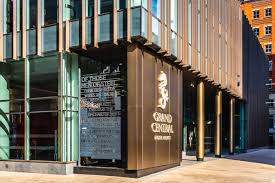
Join us for the Executive Forum staying at The Grand Central Hotel Belfast! Rising above the city skyline, the five-star Grand Central Hotel blends contemporary luxury with Belfast’s rich history. Located in the heart of the city’s Linen Quarter, the hotel offers exceptional service, stylish accommodations, a gourmet bistro, and a 23rd-floor cocktail bar with panoramic city views. Perfectly positioned near the Titanic Quarter, Cathedral Quarter, shopping, dining, theatres, and major transport links, the Grand Central is an ideal base for exploring Belfast.
Hotel Accommodations - Reservation Instructions
Instructions to secure a hotel reservation will be included in your registration confirmation e-mail. This is the only way to book a hotel room for the event. Hotel room options are offered by the number of nights of your stay and the room type you will need. See table below for room type descriptions.
Hotel rooms are available on a first-come, first-served basis. We recommend reserving your accommodations as soon as possible to ensure availability. The hotel cutoff date is May 19, 2026.
If you have any questions or experience issues while reserving your room, please reach out using our contact form here and we’ll be happy to assist.
| Room Type | Room Description |
| Lodging: Single Room | A single room has a max occupancy of 1 person. Lodging includes a deluxe king room, full Irish breakfast, VAT, concierge service, WIFI, and water in bedrooms. |
| Lodging: Double Room | A double room has a max occupancy 2 people. Lodging includes a deluxe king room, full Irish breakfast, VAT, concierge service, WIFI, and water in bedrooms. |
| Lodging: Triple Room | A triple room has a max occupancy of 3 people (adults or children 15+). Lodging includes a double bed + sofa bed, full Irish breakfast, VAT, concierge service, WIFI, and water in bedrooms. |
| Lodging: Family Occupancy | A family room has a max occupancy of 4 people (2 adults, 2 children 14 and younger). Lodging includes a double bed + sofa bed/crib, full Irish breakfast, VAT, concierge service, WIFI, and water in bedrooms. |
Presentations and schedule subject to change.
BLOWMOLDING VS ROTOMOLDING — Comparison (Matt Bushman-Plasticraft)
A process decision matrix is presented to help determine the appropriate method to produce hollow plastic parts. Plus a bonus look at a HI-BRED set up which incorporates aspects of blow molding into rotational molding.
Reducing Product Development Lead Times Using Parametric Design (Joe Butterfield-QUB)
Computer aided design (CAD) methods are relatively well established for product development in rotational moulding. This includes geometric modelling for product design articulation, structural analysis and data transfer for mould manufacture. This work presents means by which geometric modelling times for product families can be significantly reduced by using parametric modelling to generate multiple product sizes based on a single modelling framework. The work focuses on tank design and the approach begins with the development of a preliminary single product size where feature development and dimensional allocations are mapped / recorded as parameters across a single tank capacity. These parameters can then be amended to automatically generate a range of capacities were modelling times are reduced from hours / days to minutes / seconds. Each design is then validated against structural requirements using finite element analysis. The parametric approach demonstrates how CAD functionality can introduce design efficiencies for product families thereby reducing time to market.
Sustainable Rotomoulding (Ronny Ervik-Norner AS)
The presentation will explore how sustainability is reshaping rotomoulding in Europe. It will cover key European regulations, the use of recycled polyethylene suitable for rotomoulding, and practical insights into circular design. Learn why integrating circular principles is becoming essential for all rotomoulders to stay compliant, competitive, and future-ready.
The Economics of Dry Color/Compounding (Dr. Nick Henwood)
One apparent difference between market practice is the wide use of dry color in North America versus Europe’s preference for compounded color. This session provides a brief overview of the pro’s and con’s of the competing systems, plus a historical retrospective.
Digitisation of the Rotational Moulding Process (Mark Kearns-QUB)
In this presentation, we explore the digitisation of the rotational moulding process, highlighting how advanced sensor integration and data analytics can transform traditional manufacturing workflows. Our approach demonstrates the potential for significant process improvements, including enhanced quality control and reduced production times. This work underscores the potential for Industry 4.0 technologies to revolutionise rotational moulding, fostering smarter, more efficient, and more competitive manufacturing practices. Moving forward, further research will focus on scaling these digital solutions and integrating predictive analytics to maximise industry impact.
How Queen's Became Rotomolding's Research Home (Mark Kearns, Paul Nugent, & Alvin Spence)
In this panel, three people with deep ties to Queen's University and the rotomolding industry — Mark Kearns, Paul Nugent, and Alvin Spence — trace the arc of innovation through the university's different eras, from Roy Crawford's early work through today's Advanced Manufacturing Institute. They'll discuss which technologies crossed over into commercial practice and why and which promising developments never gained traction.
The ‘Amide Advantage’ is explored by thinking about the strategic transition from commodity resins to specialised engineering polymers. This presentation outlines the distinct advantages offered by the Polyamide family, including the superior heat resistance and structural properties of PA6, and the exceptional hydrocarbon resistance and low moisture absorption of PA11 and PA12.
TotalEnergies Rotomolding Materials- Sustainability Roads to the Success (Eric Maziers, TotalEnergies)
TotalEnergies is a global integrated energy company that produces and markets energies: oil and biofuels, natural gas, biogas and low-carbon hydrogen, renewables and electricity.
Our ambition is to produce 1Mt of circular polymers in 2030.
This paper presents the development and launch of a new recycled polymer compound designed to meet sustainability and performance requirements. The compound is made of 60% + of PCR content.
The compound leverages post-consumer recycled materials and advanced processing
techniques to deliver high-quality properties suitable for industrial rotomolding
applications.
The growing demand for sustainable materials has accelerated innovation in polymer
recycling. This section introduces the context of circular economy initiatives, market
drivers, and the role of recycled polymers in reducing environmental impact.
Why is it so difficult to control your cooling? (Dr. Gareth McDowell- 493K & Dr. Nick Henwood- ARM Technical Director)
Of the separate stages involved in the rotomolding process, cooling continues to be the process step where the rotomolder can exert the least control. The result of this lack of control can be an inability to maintain part quality, especially in relation to dimensional tolerances and shape retention. In addition, variations in cooling time will affect overall cycle time and will make process optimization difficult. This seminar will examine the reasons behind the lack of cooling control and will explain the major mechanisms at work within the process. This will lead to the formulation of practical action plans, to improve the reliability and consistency of cooling. In response to the acknowledged difficulties with cooling control in conventional systems, some alternative approaches will be proposed and discussed. During the Seminar, various cooling techniques will be demonstrated, in real time, using bench-top rotomolding machines.
Pick Up a Broom: Why Small Acts Drive Big Results in Manufacturing Teams (Dr. Paula Orcutt)
What if improving team performance didn’t start with a new system—but with your leadership showing up in the smallest moments?This talk offers a fresh lens on building high-performance teams in rotational molding by highlighting a surprising truth: culture is shaped less by company policy and more by what leaders model every day—especially when no one is watching. Using a powerful story involving a broom, a manufacturing floor, and one unnoticed act of service, this session illustrates how small, consistent behaviors from leaders—like picking up trash—can shift team culture, increase morale, and close the costly communication gaps between departments. These micro-moments are often overlooked, yet they are what differentiate facilities that run efficiently from those stuck in friction and turnover. Drawing on real-world experience as an owner and VP of a manufacturing company, I will introduce a communication-driven leadership model rooted in psychological safety, trust, and human clarity. I will break down how simple actions from supervisors, plant managers, and senior leaders directly impact output, accountability, and team loyalty.
Stability in the Process - A look at Uninterruptible Power Supplies (Przemysław Orlik- OREX ROTOMOULDING)
Our company noticed that many clients have trouble with fluctuations of power in the electrical grid system. Growing usage of solar panels and wind turbines creates many disturbances in the grid mainly in less developed areas
so we came forward with the two stage solution.
First stage is maintaining the control voltage in case of power loss. This greatly reduces time needed to resume normal functioning of the machine after a brief power outage or voltage surge. This solution is also very attractive in terms of cost effectiveness, the implementation is quick and relatively cheap.
Second stage is a complex solution involving using a UPS in online architecture. The state of the main power supply is monitored at all times and when the outage occurs the device takes the task of maintaining the power. This solution supplies not only control voltage but also the main power needed to proper functionality of motors and servos on the machine.
UPS is also responsible for maintaining the constant quality of power supply, meaning that is can benefit customers who are troubled with poor electrical infrastructure.
AMIC Digital Factory Overview (Graeme Ralph-QUB)
Digital Twins, Simulation, and Data-Driven Rotomolding (Johan Potargent- AMS Robotics)
From product design through manufacturing, this presentation covers an optimized production cycle using a digital twin approach. It connects software from initial product design, while respecting the constraints of rotational molding, through simulation and programming of machine movements and heating/cooling settings. The session also looks ahead to AI-driven models, including machine data collection to optimize quality and overall equipment effectiveness (OEE). By comparing manufacturing data in real time, machines can predict whether parts will meet specifications and enable predictive service interventions on molds and equipment, resulting in higher output and improved OEE.
Investing in the Future of Rotational Molding Through Design (Tony Short- Elkhart Plastics)
Whether a captive or custom molder, we all work with product design. Often times the initial designs we interact with require some form of revision because the designer or engineer is not familiar with the principles of rotationally molded process. The goal of this presentation would be to look at one or two examples of products that went through different iterations of design after consultation and consideration of the rotational molding process. What materials were considered? What design features had to be modified? Was the molder being too cautious and could they push the limits of process to help with the design? Time to market is a huge advantage and time lost in the design phase can be avoided if you can get the design as close to correct from the beginning. Understanding the molding process will help you achieve this.
Full automation systems for electrical and conventional rotational molding (Oliver Wandres-Maus GmbH)
In this presentation I would like to showcase latest achievements and examples both for electrical and conventional roto molds. From dispensing resin in molds, via closing/opening systems of molds, handling of retractable items, towards release and ejection of molded products. Starting from scratch (new molds) or upgrading of existing molds, from semi-automation towards complete automation.
Why do I get this Fuzzy appearance on my parts and how do I prevent it? (Larry Whittemore-Stoner, Inc.)
"Ghosting or Whitening, whatever you call it, this fuzzy appearance takes more time and it causes extra work to clean-up. This can be prevented by curing the Mold Release before introducing the powder into the mold. By curing the Mold release you will get more pulls per application, save more time (get more parts out of the door), use less Mold Release, and reduce your costs. During this presentation we will discuss what steps should be taken to prevent or at least minimize this from occurring and how you can save time and money.
We will also discuss Mold Release options for different polymers, mold Release options for different part shapes, as well as safer Mold Cleaners, Flow Promoters, and Parting Line protection."
Persico 1976-2026: 50 years of innovation (Sergio Zilioli-Persico)
2026 is the 50° anniversary of Persico (as ARM!). With this presentation, we will provide an overview of the company milestones starting from the first activity related to hand-made patterns up to the latest innovation into specific markets (fully automatic rotomolding machines, aerospace, automotive, medical and marine).
For More Information:
 PO Box 59235
Schaumburg, Illinois 60159
United States 630.942.6589
Cancellation Policy:
We understand that circumstances may change, and sometimes cancellations are necessary. Please review our cancellation policy below to ensure that you are fully informed of our guidelines.
- Cancellations made before April 26, 2026 are eligible for a full refund, minus a $50 processing fee.
- Cancellations made after April 26, 2026 will be handled on a case by case basis - no refunds guaranteed.
- Substitutions: If you are unable to attend but wish to send a substitute, please notify us at as soon as possible so that we can update attendee lists and name badges. You are responsible for switching names on any hotel reservations.