
Part Two: Designing Products for Rotational Molding
Molded-In Threads
Part Two: Designing Products for Rotational Molding
Molded-In ThreadsMolded-In Threads
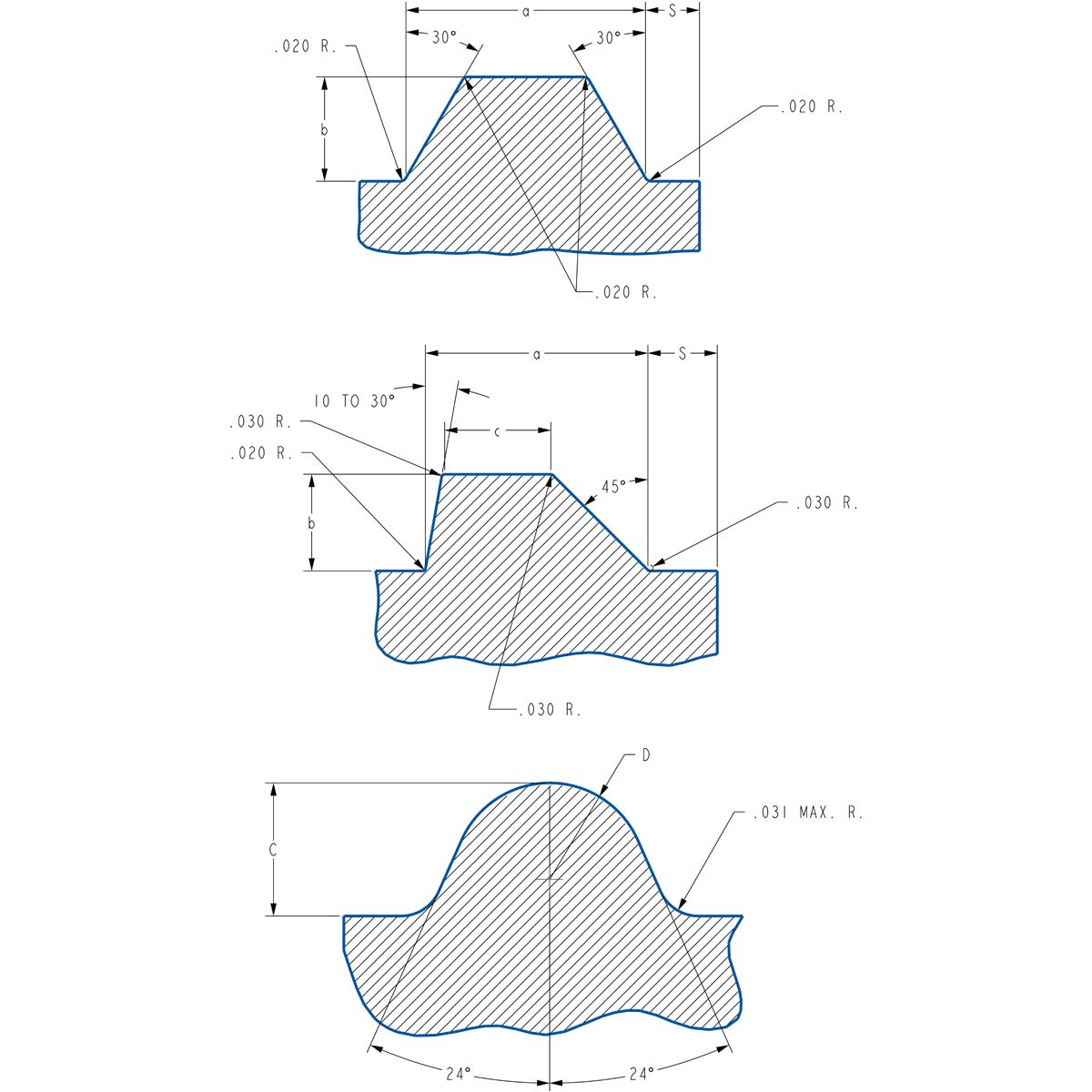
Inside and outside threads are routinely molded into rotationally molded plastic parts. Whilst many different types of threads have been molded, coarse thread forms of the Acme or modified buttress type, with a thick profile, are preferred for rotationally molded parts. Thread profiles that have been successfully rotomolded are shown in Fig 35.
Threads with sharp profiles (such as the American Standard or tapered pipe) are difficult to produce without bridging over of the tips of the thread cavities. This may result in underfilling in these areas; surface enhancers and mold flow promoters can be employed to improve thread definition.
When sharp profile threads are specified, the designer should consider providing these by machining into the part post-molding. Alternatively, the required thread could be provided via a spin-weld fitting, inserted as a finishing operation. Small, fine-pitched threads, which are very difficult to mold fully, may be better provided as a molded-in metal insert.