
Part One: The Rotational Molding Industry
Molds for Rotational Molding
Part One: The Rotational Molding Industry
Molds for Rotational MoldingMolds for Rotational Molding
Rotational molding is a low pressure process and molds are primarily a thin hollow shell that defines the outside shape and surface of the part. The inside surface of the part is formed by the thickness of the nominal wall and does not require internal cores. In most cases, molds for rotational molding are significantly lower in capital cost when compared to the types of mold typically used for blow or injection molding.
There are several different approaches to producing molds for rotomolding. Determining which type of mold to use depends upon several factors: size and shape of mold, tolerances, part aesthetic requirements, geometry, shape complexity, lead-time, and budget.
Cast Molds
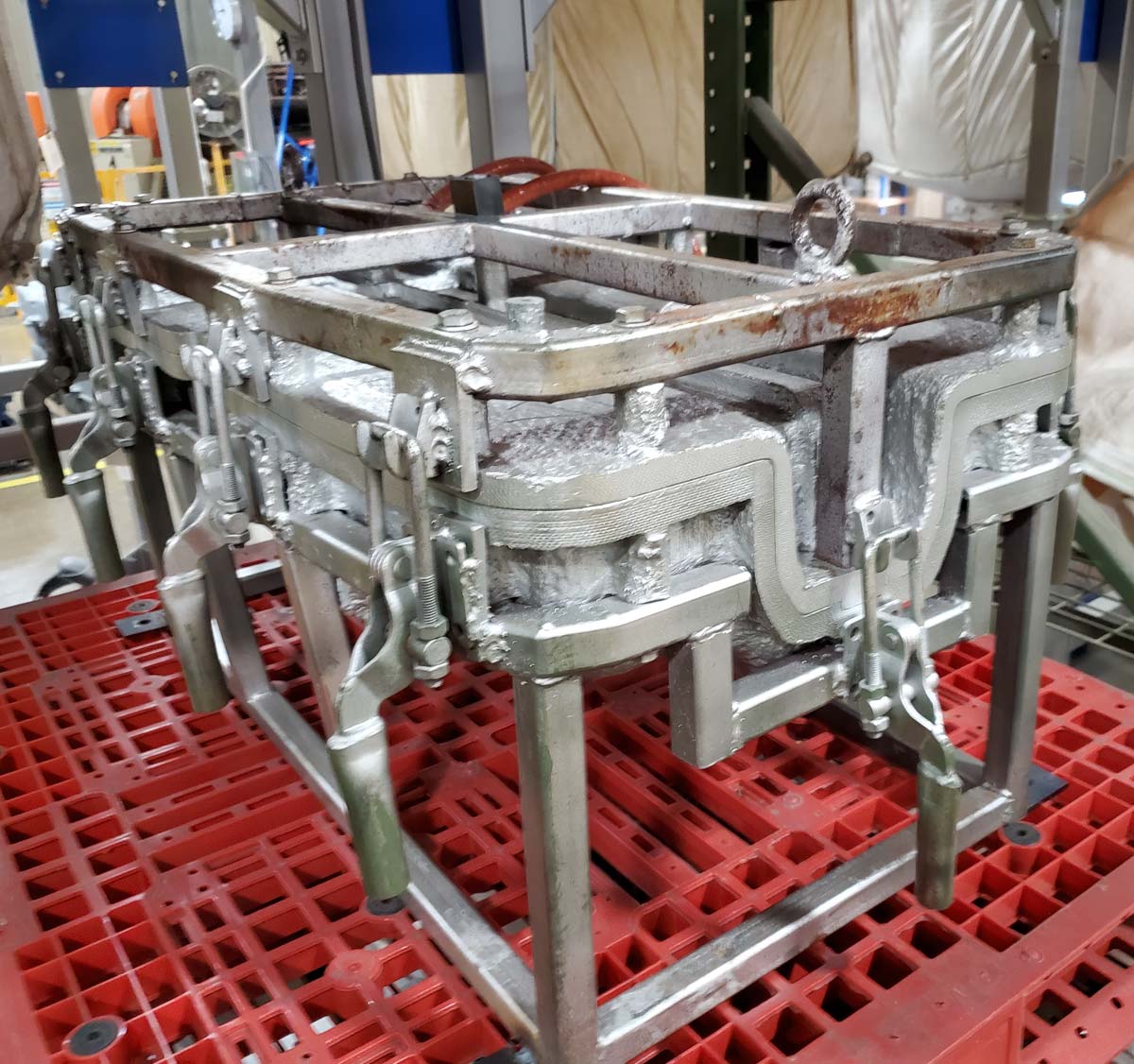
Cast aluminum molds (Fig 10) are widely used in the rotational molding industry because they offer a convenient means of creating complex shapes. Casting offers excellent repeatability for multiple molds and parts produced vary from very small to large (e.g kayaks and 400 gallon containers can be produced). Cast molds are particularly suited to products requiring complex detail, compound curves or intricate shapes.
There are a number of ways to enhance cast tool performance for longevity, molder ease, and the construction and design of specific products. While much detail can be cast directly into the mold from the model or pattern, many textures and finishes can be added after the casting has been produced. The strength and relative malleability of aluminum means that operations such as glass bead or shot peening, sand blasting and polishing can be conducted with relative ease.
Multiple piece molds can be designed, which allow part removal for undercuts or unusual shapes. Mold wall thickness can be varied or heat fins cast into the tool to produce desired heat transfer requirements, thus producing thicker or thinner walls.
Foundry equipment may limit the maximum size of single casting “pour” that can be achieved. Overall mold size can be increased by casting separate component parts and bolting them permanently together.
One significant advantage of cast aluminum molds is the ease of revising the tool to incorporate design changes or revisions. Cast aluminum molds can be updated and refurbished a number of times, at a comparatively low cost compared to purchasing new tools. For major changes or alterations that entail excessive work, it may be more economical to revise the original pattern and re-cast.
Machined Molds
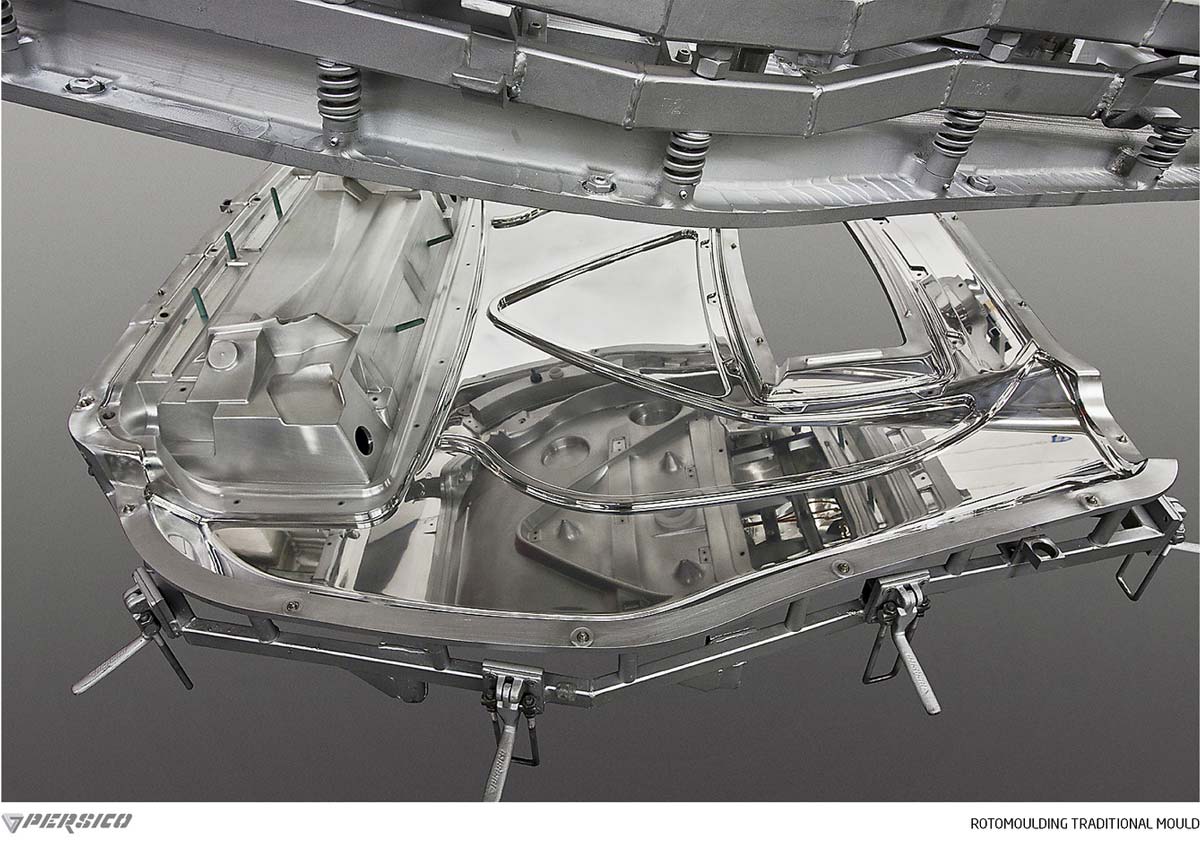
CNC machined molds (Fig 11) are typically used when maximum dimensional accuracy is required. These tools are machined from a forged aluminum billet, directly from solid model CAD data fed into the machine’s program. There is no need for a pattern or model to be made, which removes a manufacturing step of significant cost. With modern high-speed machining technology, this is one of the fastest ways to produce rotational molds. Depending on machine utilization, CNC can offer shorter lead times than cast.
Like cast molds, machined molds can be made in extremely complex shapes. Machined molds do not suffer the potential issues as cast molds such as porosity, sand inclusions, and oxide inclusions. Many machined mold makers are using panel techniques to reduce billet cost. With this method panels are machined individually and welded together.
The forged aluminum provides increased durability compared to cast molds and an excellent surface for acid etching. The machined parting lines result in minimal witness lines. Machined molds are ideal when complex part geometry requires multiple piece molds and extensive parting lines on highly aesthetic products. The typical overall tolerance on a machined aluminum mold is ±0.010”.
The maximum size of mold that can be created depends on the dimensions of the CNC machine. It is possible to expand this size range by manufacturing mold components and then permanently fixing them together (by bolting or by welding).
Fabricated Molds

Fabricated molds (Fig 12) from carbon steel, stainless steel and aluminum sheet are widely used for parts of simple geometry and are particularly suited to very large parts. More complex shapes can be fabricated, within limits, but excessive complexity creates a level of additional work than may make fabrication uneconomic. Duplicate molds can only be made within the tolerances of human ability, because a pattern is not used to make the mold.
Steel fabricated molds have the advantage of not experiencing the heat expansion differences between aluminum and the steel mounting structures. Generally, the completed units are lighter weight than cast aluminum molds. A lower cost may be realized because of not requiring the expense of producing a full-size pattern.
Fabricated steel molds are very durable. Aluminum and stainless steel will not rust like carbon steel in the harsh environment of repeated heating and cooling cycles. The strength and toughness of steel is an advantage in any maintenance requirements and mold alterations should be at least as low cost as for cast molds.
The production of surface textures in steel molds is more difficult, because of increased surface harness. For local decoration, embossed patterns and logo plates can be used.
Electroformed Nickel Molds
Electroformed cavities are less common, but they have the advantage of being able to reproduce faithfully fine details such as wood or leather graining which would be difficult to achieve by other techniques. Figurine molds are a good example of an application where large numbers of identical cavities can be made economically.
To fully utilise the additional detail available, a liquid polymer such as polyvinyl chloride (PVC) plastisol is normally used. Electroformed cavities are frequently used to produce hollow undercut cavities for the molding of flexible materials such as PVC. Doll head molds, in which the entire part is pulled out through the neck opening, are a good example of this approach. The size of the electroformed molds is limited by the size of the plating tanks, although electroformed molds have occasionally been used to produce significantly larger items.
Vapor-Formed Nickel Molds
Although similar to electroformed molds, vapor-formed nickel molds are more costly. They have the advantage of producing a more uniform cavity wall thickness with less buildup of nickel on sharp outside corners.
Non-Metallic Molds
Liquid thermosetting polyester and epoxy materials are formed and cured at room temperature. The molds used for these types of materials can be fabricated by using room temperature curing silicone and fiberglass fabrication techniques. Temperatures at which these molds are run usually do not exceed 450°F; therefore, cycle times are extended. In a typical gas oven, this type of mold will yield up to 100 parts, making this a method for prototyping. Some new types of composite molds (CMT) have electrical heating elements embedded in the mold material so that the mold can be heated without the need for an oven.
Release Coatings
For most rotomoldable materials, it will be necessary to provide a release surface on the mold, to facilitate reliable and controllable separation of the plastic as it cools. Molds can be treated, post-manufacture, with a permanent release coating, usually based on PTFE compounds. Alternatively, semi-permanent mould release coatings can be applied periodically during the molding process.
Summary
To a great extent, the quality of rotomolded parts is critically dependent upon the quality and precision incorporated into the mold; there simply is no substitute for a good quality mold. This applies especially to holding tight part tolerances.
Each of the various types of molds described above has its own unique advantages and disadvantages. An experienced rotational molder can provide advice as to which type of mold will be most suitable for a particular application and budget.
Manufacturing methods for molds and ancillary items are the subject of on-going development and improvements are regularly fed back to industry, to promote continuous quality improvement.