
Part Two: Designing Products for Rotational Molding
Finishing, Decorating & Other Post-mold Operations
Part Two: Designing Products for Rotational Molding
Finishing, Decorating & Other Post-mold OperationsFinishing, Decorating & Other Post-mold Operations
Some rotationally molded plastic parts are ready to use as soon as they come out of the mold. This will mainly be industrial-type parts for relatively undemanding applications and markets. This can be a particular advantage of rotomolding, compared to other processes (eg thermoforming and extrusion blow molding), which invariably require post-mold trimming.
More sophisticated rotomolded parts will require some type of finishing operation to be carried out, to make them suitable for sale.
Trimming & Cutting
For some medium / large industrial parts, the only additional work that may be required is trimming off excess “flash” at parting lines or mold shutoffs. If the mold parting lines are well fitting and properly maintained, this can be a simple manual operation with a suitable knife or scraper. It may well be possible for such minimal procedures to be carried out by machine operators, within the overall molding cycle.
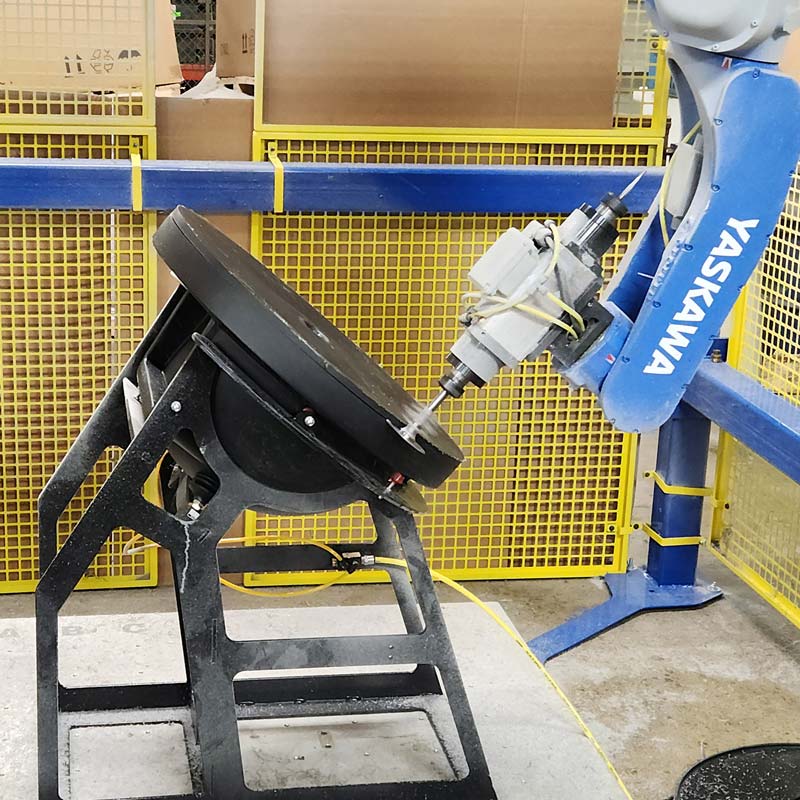
More complex parts, especially those with an aesthetic requirement, may require considerable finishing operations to be carried out. Typically these will be conducted off-line from the product cycle, possibly by specialist operatives. There is also a growing trend for complicated cutting procedures to be carried out by specialist machines. Programmable robots and multi-axis routers are both used by rotomolders. In some cases, this may enable complex finished parts to be produced beyond the practical and commercial capability of hand operations. Part cutting by automation can reduce scrap rates (due to inaccurate hand operations), as well as improving safety records (by eliminating minor cuts by knives and other bladed hand tools). See Fig 37.
It is recommended that trimmings and cut-outs are collected for subsequent reprocessing and material recycling. This is not possible with crosslinkable polyethylene (XLPE) and may be commercially unviable with non-PE speciality materials.
Marking, Labels & Graphics
Parts requiring batch traceability my require coding by some form of post-mold marking. This may be as simple as the attachment of a standard self-adhesive label to the part in a prescribed location. However, typical rotomolding materials (especially polyethylene) tend to be chemically inert and this will affect the strength and longevity of the part / label bond.
The long-term integrity of part labelling for user safety reasons should be carefully considered. If a warning label becomes detached from a product during its lifetime, product warranties and seller liability protection may be compromised.
The above comments also apply to decorative decals, that are applied post-molding. Standard adhesive systems are likely to fail long-term, although some specialist adhesive systems are available that claim better performance-in-use lifetimes.
If a truly permanent marking of a rotomolded part is required, there are several options that can be considered.

Engraved sections can be incorporated into the mold (Fig 38), so that plastic forms around its features and reproduces any information it contains in relief. This is a typical method for incorporating marketing information, plastic classification triangles, or simple user / safety instructions. However, the information will be in the same color as the overall plastic part, so the marking will not stand out from its surroundings. Engraved sections can be made as removable mold inserts, which allow for changes to be made. Examples of such devices are “date code wheels”, which allow rudimentary product traceability to be achieved.
Hot stamping is another way of permanently marking parts, as a post-molding operation. A heated die is applied briefly to the surface of the part and then removed. The plastic material of the part melts locally and yields to produce a mirror relief of the stamp. Once again, such a marking will not stand out from its surroundings. Hot foil stamping is a variant of this, where a metallic foil is inserted between the die and the plastic substrate; this will enhance visibility of the marking.
Special ink formulations exist that can be applied to the mold surface, during the loading of a fresh material shot weight. As the material melts during rotomolding, the ink will bond into the plastic surface; usually the ink formulation employs ingredients that are compatible with the plastic substrate, such as polyethylene wax. Inks can be applied in various ways, such as by brush, by screen printing or by roller using a temporary stencil. These methods are all effective for relatively simple, one-color marking.

For permanent marking that is more complex, especially multi-color effects, graphics can be applied (Fig 39), using various proprietary systems. Once again, the inks in the formulation must be compatible with the plastic substrate being used.
Graphics may be designed to be applied to the mold surface prior to molding (so called “in-mold graphics”) or may be applied to the molded part (“post-mold graphics”). While both types create a permanent marking, in-mold graphics generally have better wear characteristics. In-mold graphics fuse to the plastic substrate as in melts during the rotomolding process. Post-mold graphics are transferred to the molded part and are then bonded to the substrate by the momentary application of heat, using either hot air or applied flame.
Such graphics are usually created by a special screen-printing method, which applies a thin ink layer to a release film or paper. The graphic is then positioned correctly and applied to either the mold surface or part surface by abrasion of the back of the release surface. In some systems, it will be necessary to apply an adhesive spray prior to transfer.
Seals, Caps & Closures
Openings in parts may be sealed by removable or permanent caps or plugs.
Removable closures are often injection molded components that mate with molded-in screw threads on the rotomolded part.
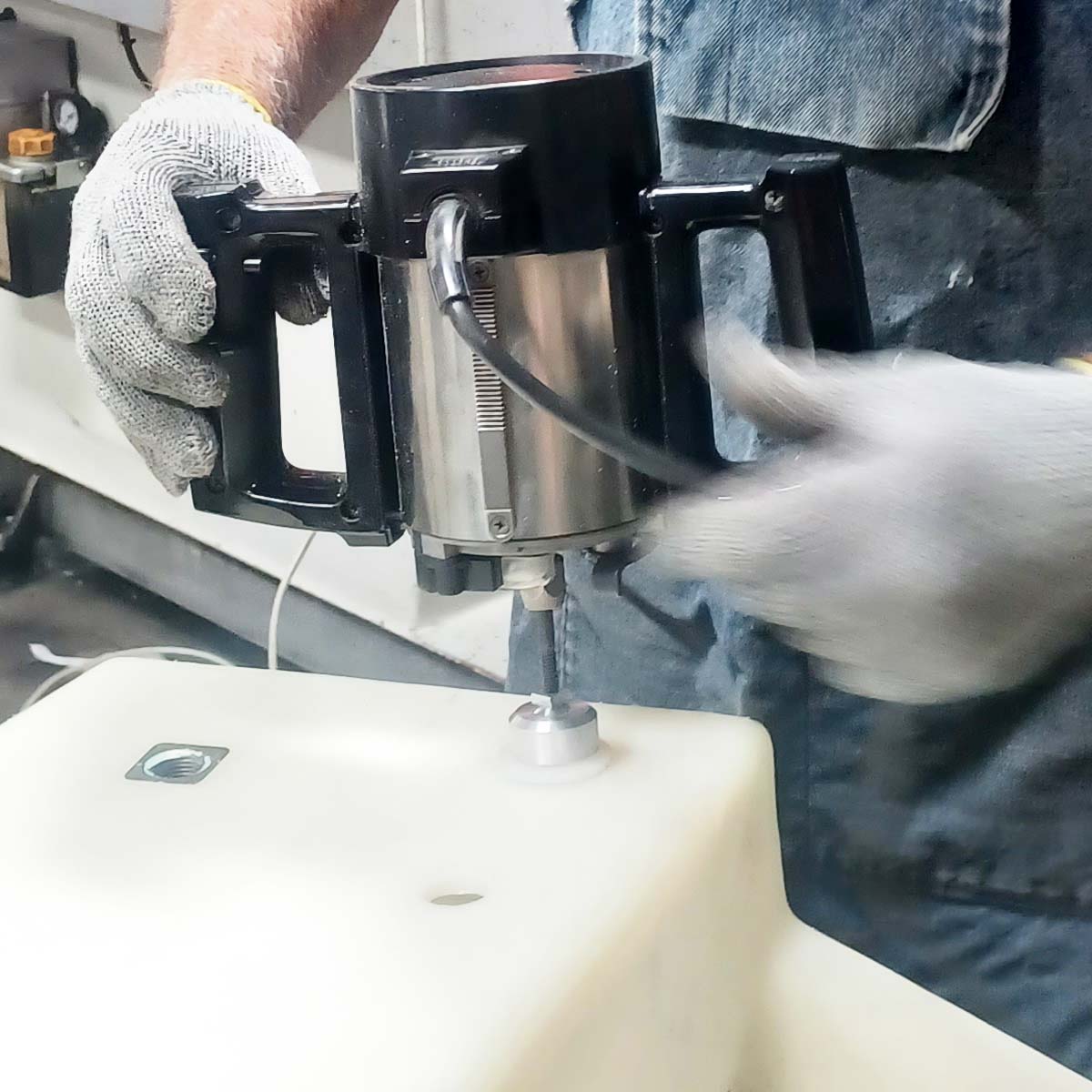
Permanent closures may be sealed using an interference fit. A more robust closure method is to use a spin-weld fitting; these are injection molded items made from a compatible plastic (eg a polyethylene spin-weld fitting and a polyethylene rotomolded part). The spin-weld fitting is attached to a router using a purpose-made jig and held firmly against the rotomolded part in the appropriate place. The router is then activated and the fitting rotates at speed. Contact between the fitting and the part generates frictional heat, which melts the surfaces of both items. After a short time rotation is stopped and the melted surfaces bond together as the plastic cools and solidifies. See Fig 40.
Joining Parts Together
Individual rotomolded parts can be attached to each other, post molding, in various ways.
Standard mechanical techniques can be employed, such as riveting, screwing or bolting. Molded-in metal inserts can provide additional security, although these need to be tightened under controlled torque, to prevent pull-out.
Post-applied inserts offer an alternative to molded-in inserts. Typical methods of installing post-applied inserts is by press-fit, screw-in and 2-piece bulkhead fittings. Many common post-applied parts take the form of threaded inserts, sleeves, bushings, core pins, axles and handles.
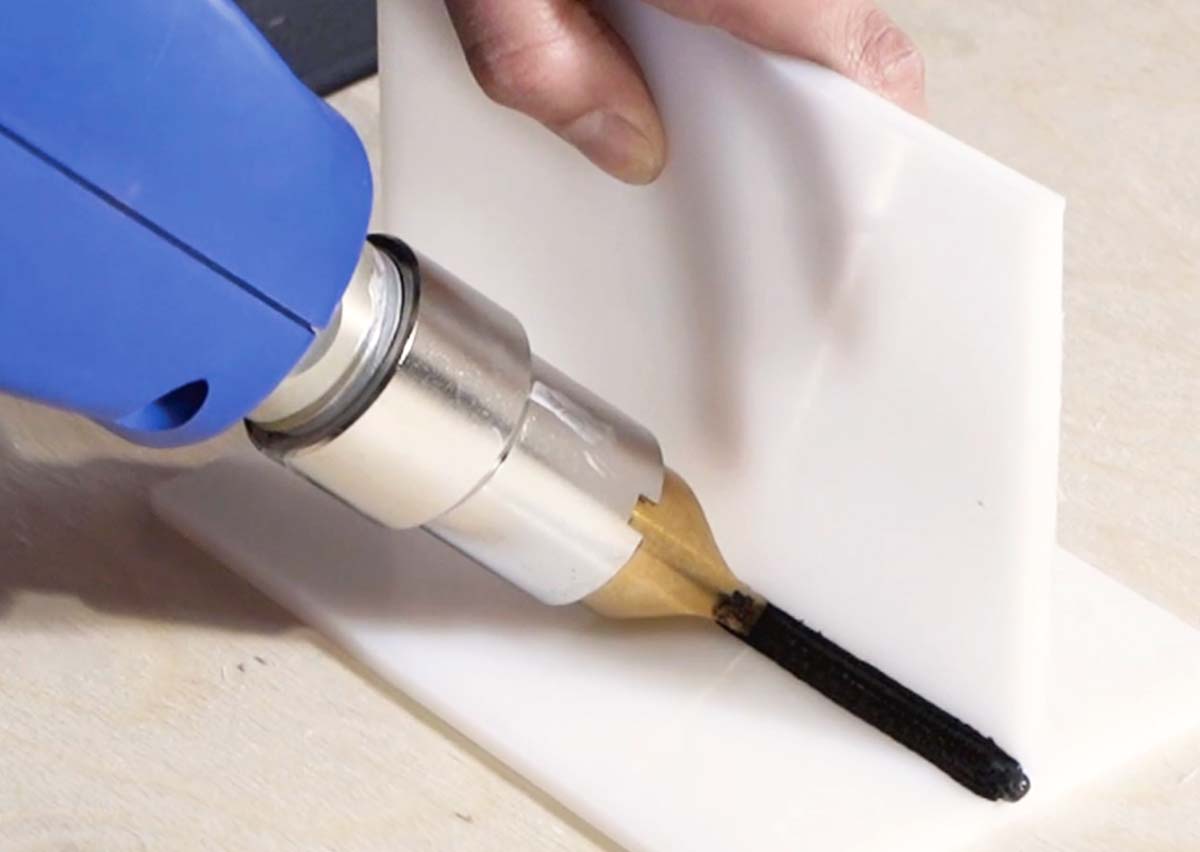
Welding techniques may be used to bond parts together (Fig 41). Part surfaces are prepared, similar to metal welding, brought together physically and then joined by application of a heated plastic welding rod. The rod may be heated by concentrated hot air, blown over both part surfaces and the rod, so that all surfaces melt and meld together. In some welding machines, the rod is hot melt extruded on to the heated part surfaces. Significant operator skill training may be necessary for the development of an effective hand welding technique. In a few cases, rotomolded parts are welded together on automated machines.
Hot air welders may also be used, in limited circumstances, to repair minor defects in parts, such as blow-holes or the effects of powder bridging. Whilst this may be a necessary expedient in some cases, it is obviously better to identify and rectify the cause of part defects so they do not occur.
Post-Applied Components
One of the great advantages of rotational molding is the design versatility it allows, to accommodate a variety of post-molding assembly components. Inserts, bushings, cores, recesses and complex shapes can provide easy attachment points to convert a molded part into a fully functional assembly. One example is a molded tank fitted with motor, pump and auger mounts, drains and fill ports, sight windows and fill level indicators. Other examples are ice chests, coolers, fish boxes and chemical tanks that can be designed to accept hinge and axle pins, lid gaskets and seals and drain ports. The part designer should consider form, fit and function of the finished part assembly.
Foam Filling
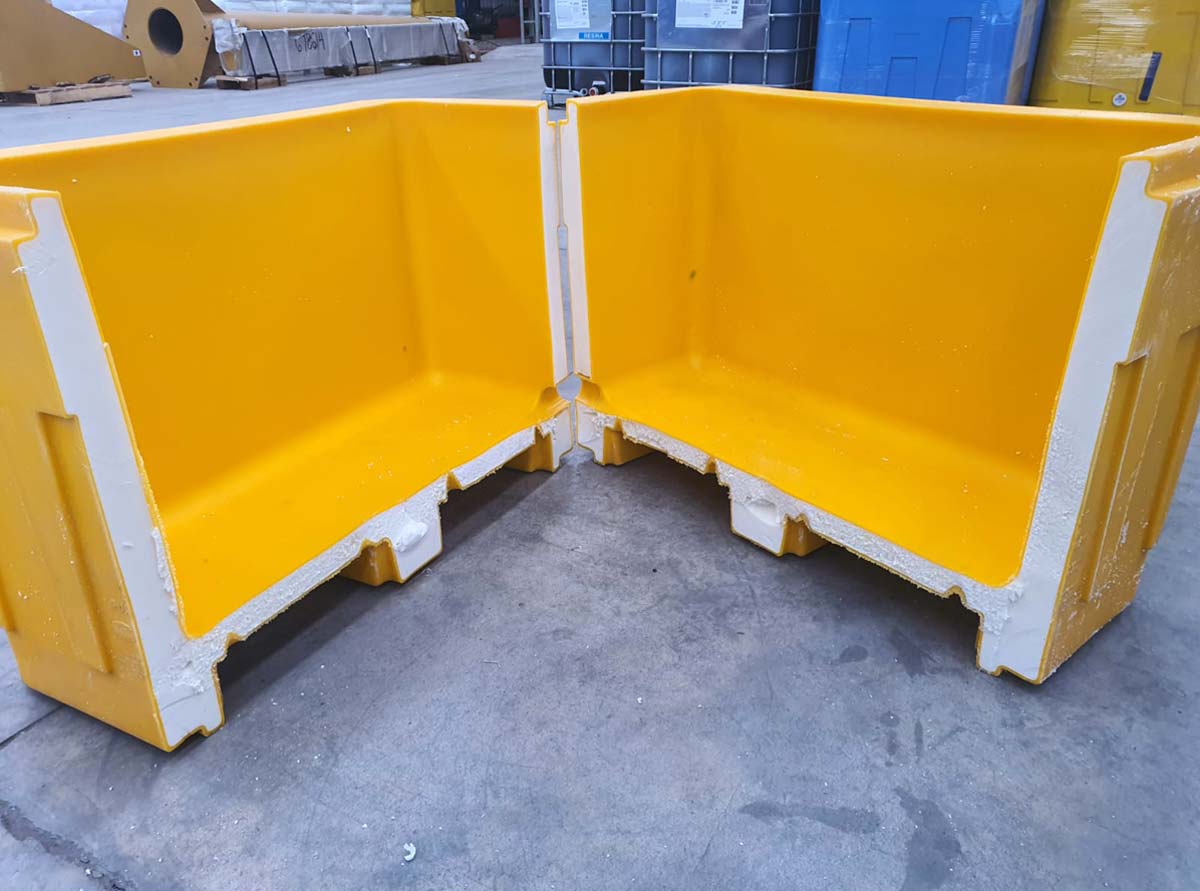
Some double-walled parts are designed to be filled with foam, post molding. The purpose will be to enhance the performance of the part in some way.
Injection of polyurethane (PU) foam will improve heat insulation characteristics and is common in drinks coolers and bulk food containers (Fig 42). PU foam may also be applied to provide enhanced sound transmission characteristics (eg in large loudspeaker cabinets). PU foam injection has been used to provide extra overall stiffness, although its capacity to do this is limited.
Post-mold foam filling is common for products requiring buoyancy. For products operating at surface level, this can be achieved using PU foam or, more commonly, a foam made from pre-expanded polystyrene micro-spheres which are fused together by the application of steam. Subterranean flotation devices require greater crush resistance (from water pressure at depth) and this is usually achieved by post-mold filling with so-called “syntactic” foams; these are an epoxy resin matrix dispersed with glass micro-spheres.
The inert chemical characteristics of polyethylene means that, under normal conditions, post-mold foams will rapidly de-laminate from the inside surface of the part. This may be mitigated somewhat by introducing complexities to the part design, such as extra ribs, protrusions or corners. Delamination is usually less of a problem for small parts than for large ones; in large parts with flat surfaces, such delamination can seriously affect product performance. Whilst various expedients have been suggested to eliminate this problem, there are no simple, standard techniques available at the time of writing.
Enhancing Surface Quality
The surface quality of rotomolded plastic surfaces will be affected by the inside surface quality of the tool surface. It is possible to achieve a relatively high gloss surface with polyethylene, provided that the tool surface is highly polished. Additional surface gloss is sometimes created by buffing and polishing the part, or by momentary application of a naked flame to the part surface (“flaming”).
Many plastic materials used in rotomolding are relatively soft and will scratch easily. Whilst this may not be a problem for utilitarian applications, surface scratching can easily mar aesthetic appeal. Textures are often deliberately introduced on to the inside surface of tooling; the molded part will replicate this texture and subsequent surface scratches on the part may be hidden from a casual inspection. Textures are also often applied to some areas, simply to create more visual interest.
Accommodating Material Shrinkage
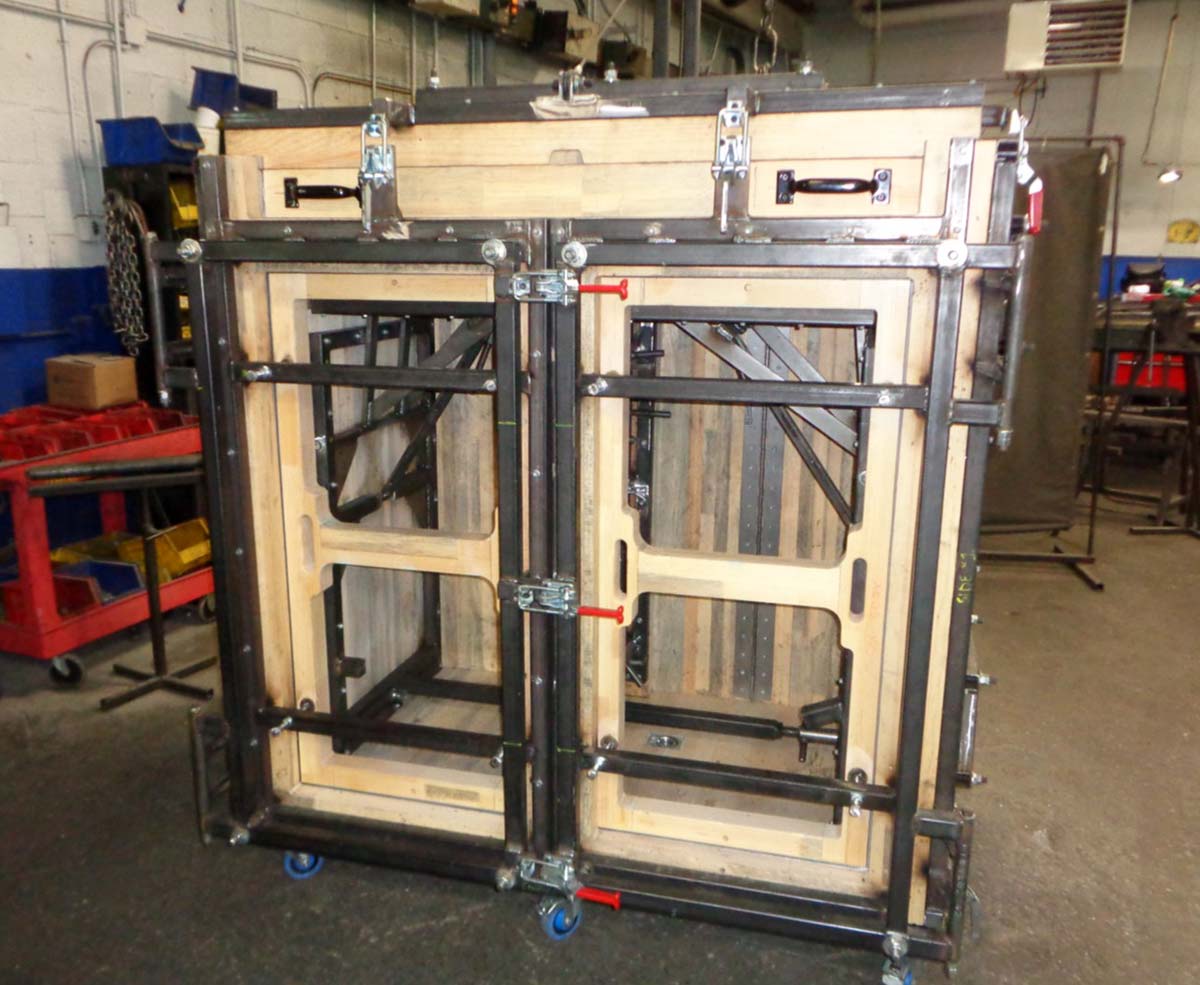
Semi-crystalline polymers have a tendency to shrink as they transition from molten to solid states during cooling. In the case of polyethylene, this propensity is well known and can be significant (up to 4% linear shrinkage). Whilst this shrinkage may be accommodated in low-tolerance applications, it may need to be controlled in others. As a general rule, high tolerances cannot be maintained in all areas simultaneously, so it is important that critical tolerance areas are identified during the design process. Rotomolders use various methods to maintain critical tolerances, but the most usual technique is to employ shrinkage fixtures. Parts are inserted into such fixtures, preferably immediately after demolding, while they are still hot. Constraints are then applied to critical areas to reduce shrinkage; such constraints may be purely mechanical on may be achieved by pressurizing the part with compressed air. See Fig 43.
Performance Testing
Finished parts are sometimes subjected to immediate performance testing, once all other necessary post-mold operations have been completed. A common example of such procedures is leak testing of tanks and containers. Requirements and techniques should be developed for such procedures at the design stage. A key decision will be whether it is necessary to test every part produced, or a randomly chosen selection of parts.
Part Packaging & Shipment
Many rotomolded parts can be shipped using standard packaging types such as in boxes or on pallets. It may even be possible to ship loose collections of small parts using the gaylord boxes in which plastic powder is supplied to the rotomolder.
Very large parts may be loaded directly into trucks with a minimum of other packaging.
Finished parts of significant complexity or high value may require purpose-made packaging for safe and effective shipping.
Rotomolded parts are prone to develop a significant static charge during the molding process itself. A combination of using a highly insulative material (ie polyethylene), in a finely divided product form (powder), subjecting the material to continuous movement (inside the mold during the initial stages of cooking) and hot, dry ambient conditions may all conspire to generate localized static charges on the surface of the final part. Such a statically charged demolded part may quickly attract a significant amount of dirt and dust from its immediate surroundings. In circumstances where parts are required to be pristine within their packaging, it may be necessary to immediately insert demolded parts into protective bags, to prevent the involuntary acquisition of contamination.
The relative softness of polyethylene means that it can be easily scratched by even mild mistreatment. Controlled handling procedures and correctly designed packaging will mitigate these effects.
In all cases, it is wise to incorporate a packaging plan into the design stage of the product, rather than letting this be an afterthought.